MSK NEWS
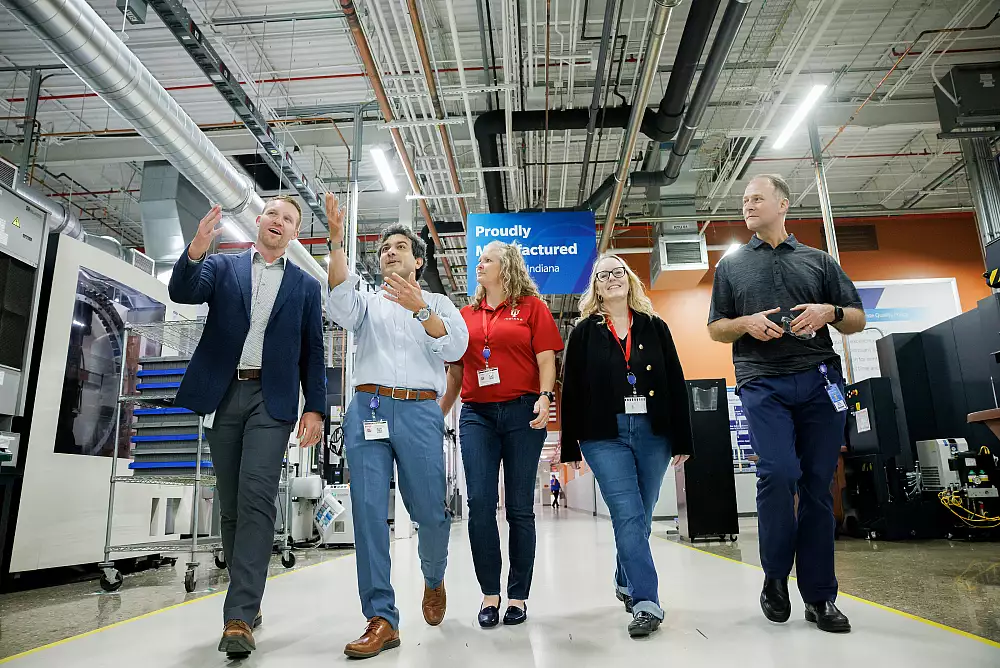
Left to right: John P. Kemp, Peter Croucher, and Ryan C. Chai
IFMRS Working Group Helps Deliver a Landmark Bone Genetics Paper
The IFMRS Big Data Working Group (chaired by Dr. Doug Kiel, Harvard Medical School and Beth Israel Deaconess Medical Center, Boston, MA), was a key catalyst around a landmarkpaper entitled “Multiscale analysis and functional validiation of the cellular and genetic determinants of skeletal health” published in Nature Genetics in July 2026. This paper mapped 34 distinct cell types and hundreds of new genes regulating bone formation and loss to help uncover targets for skeletal diseases.
What follows is a description of the paper by one of its lead authors, Professor John P. Kemp, BSc(Hons), MSc, PhD, Mater Research Institute, The University of Queensland, Translational Research Institute, Woolloongabba, Queensland, Australia.
How it started
Great science often begins with a casual chat over a drink. At the 2019 Australia and New Zealand Bone and Mineral Society meeting in Darwin, authors met at a local pub after the day's sessions. What began as informal chatter about our different expertise—single-cell omics, population genetics, and high-throughput bone phenotyping—evolved into a plan to systematically uncover the genes and cells that regulate the skeleton. After years of teamwork, that pub conversation culminated in the current paper, highlighting the vital role transdisciplinary collaborative research plays in driving and disseminating impactful scientific discoveries.
What is the background of the study?
Genome-wide association studies (GWAS) have identified hundreds of genomic regions associated with bone mineral density (BMD). However, translating these findings into pharmacotherapies remains a significant challenge, primarily due to the difficulty in pinpointing genes within these regions that regulate BMD. To address this challenge, the study integrated three complementary approaches: GWAS to identify genomic regions containing candidate genes, single-cell transcriptomics to identify candidate genes expressed in bone-regulating cells, and in vivo screens to validate the predicted role of selected candidate genes in regulating BMD.
What did the study find?
This integrated approach the mapping of candidate genes to specific cell populations within the endosteal compartment of bone. We generated a comprehensive cellular atlas of bone identifying 34 distinct cell populations and prioritised hundreds of candidate genes, over half of which had never previously been linked to bone biology. Crucially, functional validation in mouse models confirmed that many of these candidate genes alter bone mass and structure through classical bone-resident cell types, but also highlighted an unexpected, vital role for endothelial and vascular smooth muscle cells in skeletal health and disease.
What is the application of these findings?To facilitate access to these diverse data, members of the IFMRS big data working group created a bespoke web platform that helps researchers to identify bone-regulating genes and formulate cellular and mechanistic hypotheses regarding their role in rare and common skeletal diseases, including bone cancers.
The platform can be accessed using at https://www.musculoskeletal-genomics.org.
Read the full paper